Project Overview
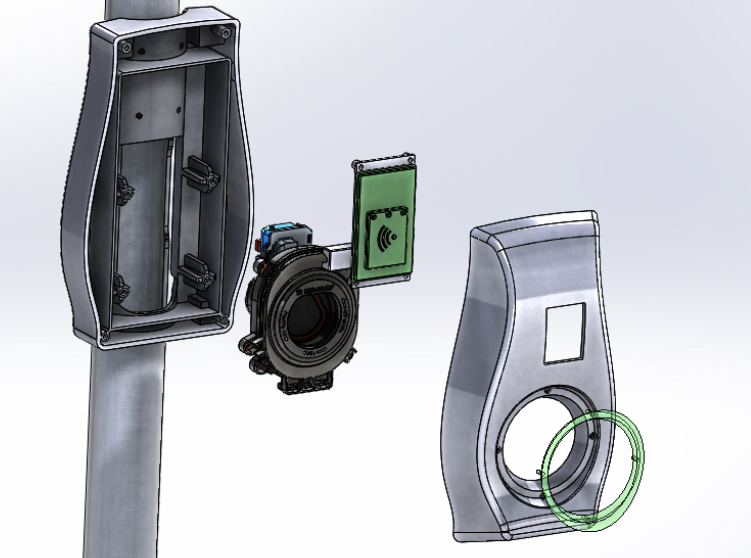
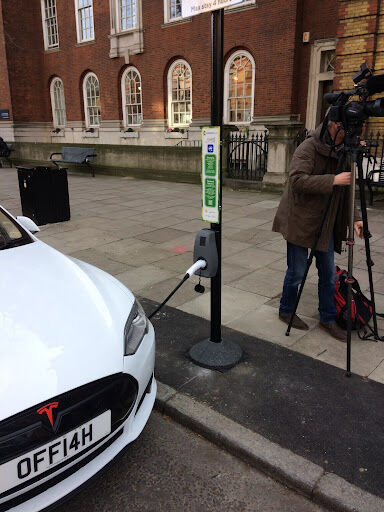
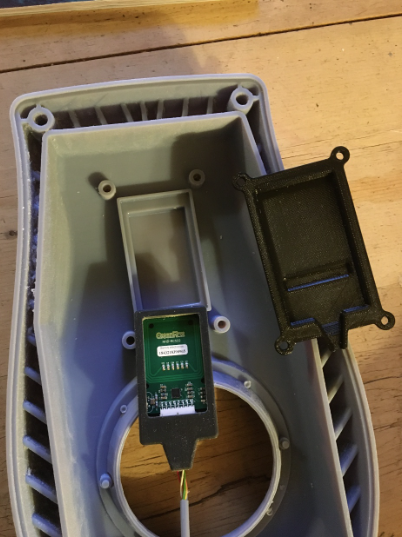
Connected Kerb approached Rediweld with a design brief to develop a lamppost-mounted EV charger unit for municipal use. The charger needed to be robust enough for street environments, visually appealing to users and passers-by, and safe and easy to use. The unit also needed to house multiple components including a charger socket, RFID board, LED indicators, PCB board and internal cabling.
The Design Challenge
The main challenge was designing a casing that could securely package all components while remaining durable, weather resistant and simple to install on existing lampposts. The design also needed to support reliable operation in busy urban environments while maintaining a clean, attractive appearance.
Concept Development
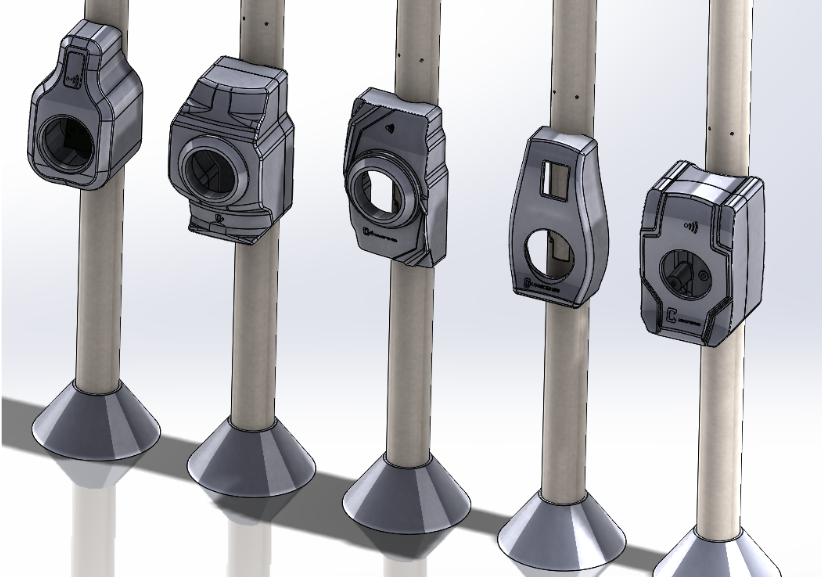
Rediweld began by arranging the supplied components into a logical layout to create a space envelope for the charger casing. Early “blue sky” concepts were produced to explore potential design directions and understand how the casing would integrate with the lamppost. A set of concepts was presented to the client to refine the design language and overall form.
Prototyping and Early Testing
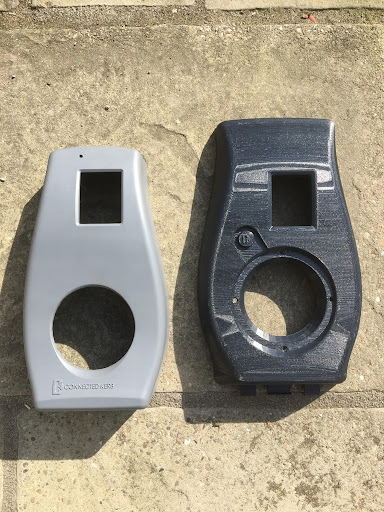
Initial prototypes were produced using 3D printing, allowing assembly tests to be carried out and confidence in the design to grow. These 3D prints were then used to create high-quality polyurethane (PU) mouldings, producing parts with a finish similar to injection mouldings. These were suitable for limited production and further testing.
Pilot Product Launch
The PU mouldings enabled Connected Kerb to launch a small number of units onto city streets. This early deployment allowed the company to:
- Gather real-world user feedback
- Increase market awareness
- Demonstrate the product to investors
- Secure future funding
Assembly testing also helped identify improvements in component mounting and cable routing.
Design Refinement
Testing revealed the advantages of evolving the design into a two-part front and rear casing, making installation onto lampposts simpler and improving water resistance.
Using SolidWorks CAD and 3D printing, the updated design was quickly developed and validated. Waterproof rubber boots were designed for electrical components and tested under compression.
LED indicators were incorporated into the casing, with PU castings in different tints and thicknesses used to optimise light diffusion and visibility.
Engineering the Final Casing
The final design developed into a hinged clamshell enclosure. The casing featured:
- 5mm thick wall sections for durability
- Reinforced double-skin construction
- Additional protection for internal electronics
This design provided a rigid structure capable of withstanding demanding street conditions.
Manufacturing Preparation
Detailed design validation was carried out through CAD modelling and additional 3D printing.
Metalwork components were also engineered to ensure efficient cutting processes and a precise fit during assembly. Initial manufacturing preparation was managed to support the upcoming product launch.
Tooling and Production Setup
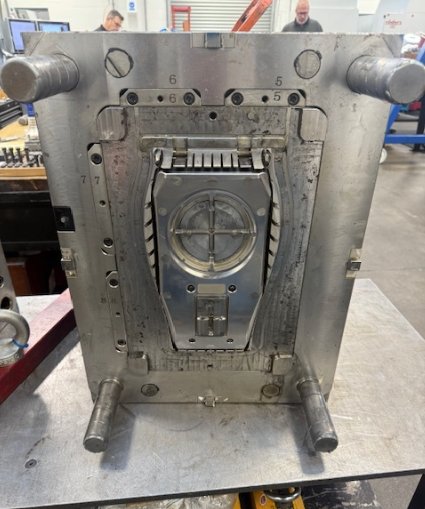
Injection mould tooling was sourced and coordinated across multiple toolmakers to ensure timely delivery of first-off production samples for testing and approval.
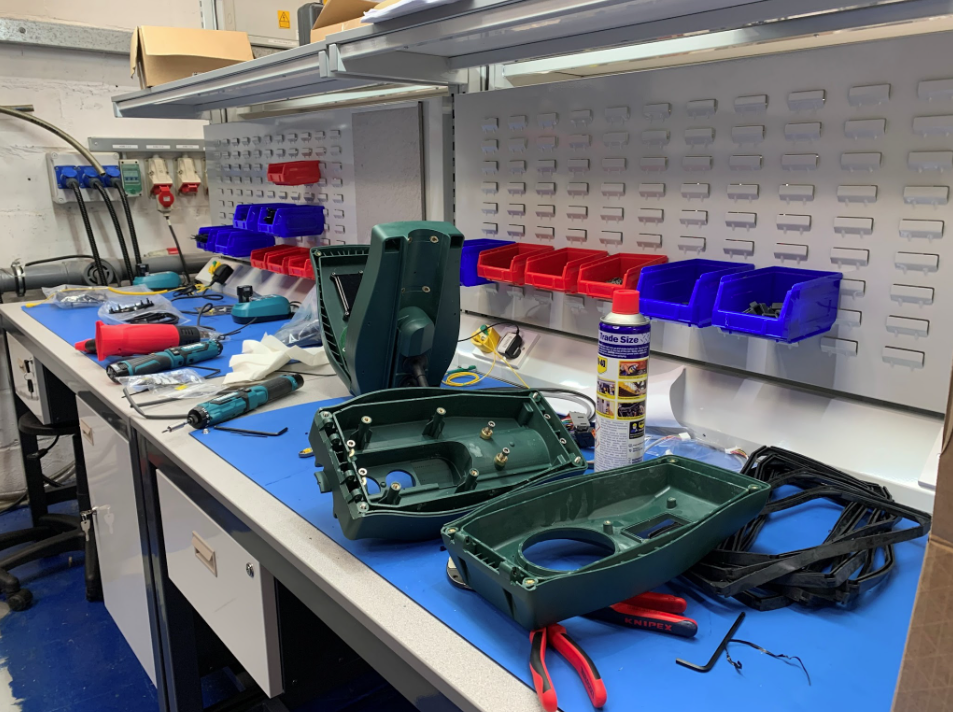
Assembly areas were established, personnel trained, and specialist equipment procured. Assembly procedures and packaging solutions were also developed to deliver fully tested finished products.
Product Launch and Deployment
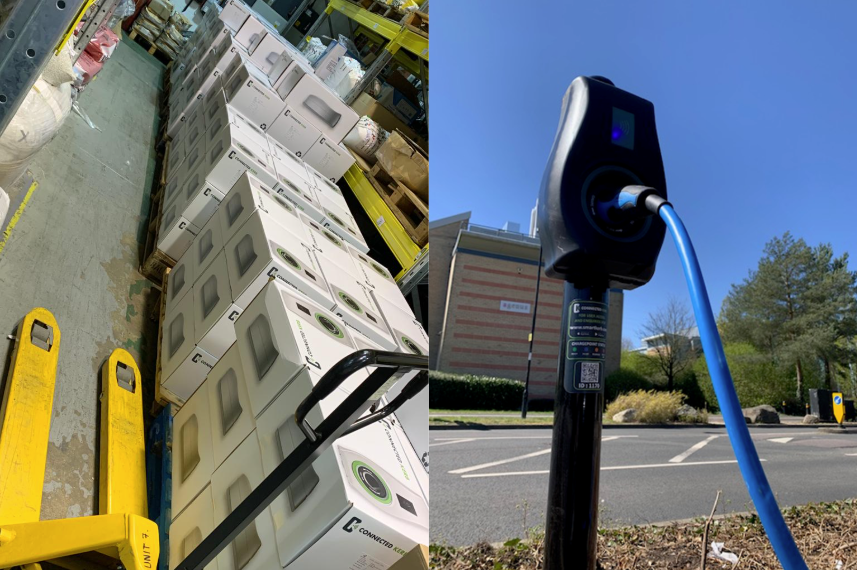
A dedicated assembly unit was introduced to maintain a reliable supply chain. Finished products were packed and stored ready for dispatch directly to installation sites across the UK.
Rediweld supported the initial product launch alongside Connected Kerb to optimise processes and ensure product reliability.
Project Outcome
The lamppost-mounted EV charger was successfully installed and deployed, delivering a durable, attractive and practical charging solution for urban environments. The project concluded with the product fully operational and ready for ongoing monitoring and expansion.